Running a small business often means making big investments at the right time. Whether it’s upgrading machinery, buying vehicles, or replacing outdated tools, equipment plays a huge role in how efficiently your business operates.
The challenge? Most equipment comes with a high upfront cost.
That’s where equipment financing comes in. Instead of paying everything out of pocket, you can spread the cost over time while still getting the tools you need to grow.
In this guide, you’ll learn how equipment financing works, the different options available, how to qualify, and how to decide if it’s the right move for your business.
- Summary
- Equipment financing helps small businesses acquire essential tools without large upfront costs, allowing them to pay in manageable monthly installments while preserving cash flow.
- The process is simple and fast, involving choosing equipment, applying with a lender, getting approved, and repaying over time often within terms of 1 to 10 years.
- There are multiple financing options available, including equipment loans, leasing, sale-leaseback, and SBA loans, each suited for different business needs and goals.
- Key benefits include improved cash flow, access to better equipment, tax advantages like Section 179, and faster approvals, making it a practical funding solution for many businesses.
- Before applying, businesses should understand eligibility, compare lenders, and avoid common mistakes, ensuring the financing aligns with their growth strategy and long-term goals.
What is Equipment Financing?
Equipment financing is a type of business funding that helps you purchase or lease equipment without paying the full cost upfront. The equipment itself usually serves as collateral, which makes it easier to qualify compared to unsecured loans.
This type of financing is commonly used for:
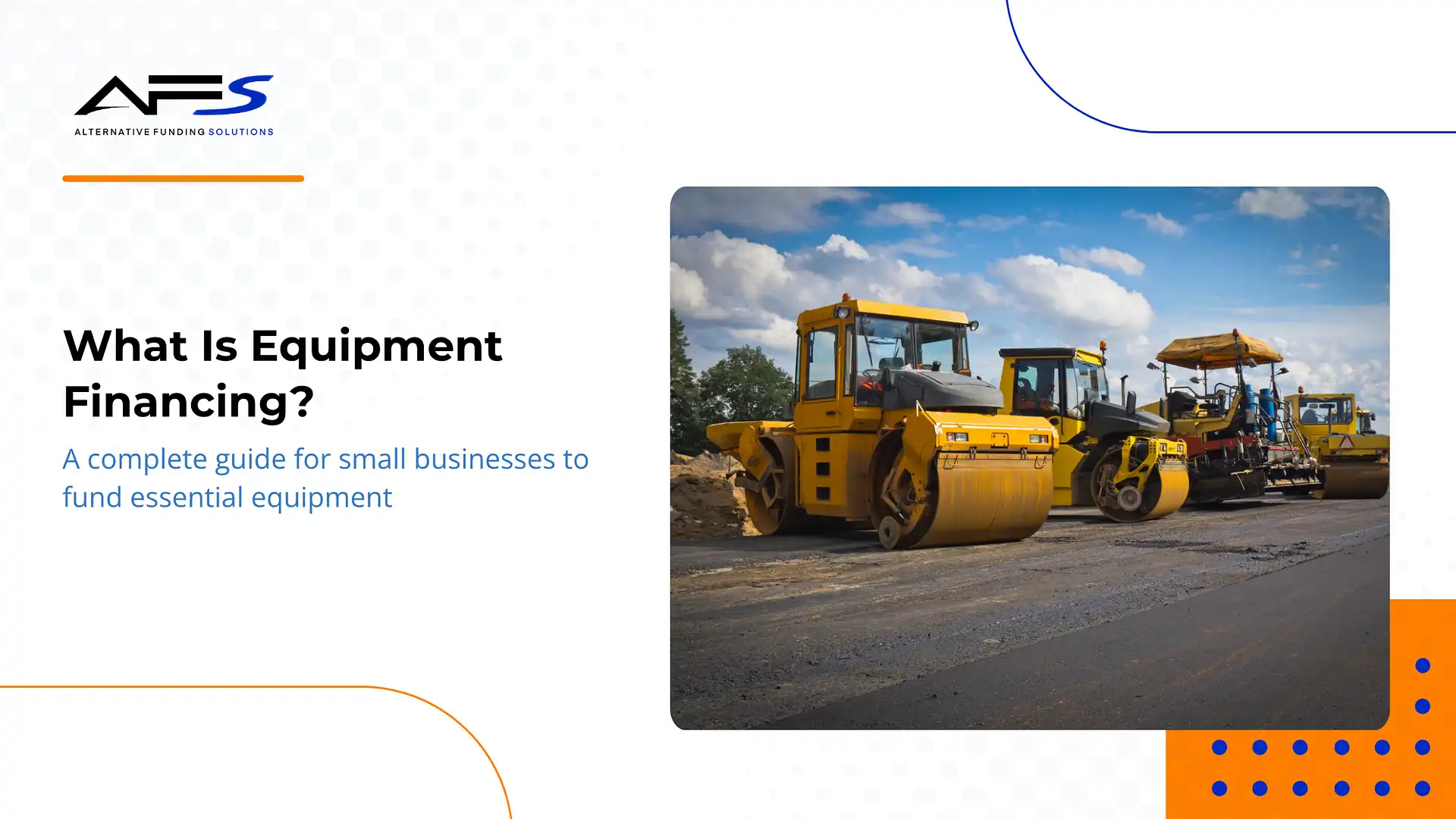
- Construction machinery
- Commercial vehicles
- Restaurant equipment
- Medical devices
- Office and IT systems
In simple terms, you get the equipment now and pay for it over time in manageable installments.
How Does Equipment Financing Work?
The process is simpler than it might seem, and in many cases, it moves faster than traditional business loans. Here’s what you can expect:
1. Choose your equipment
Start by identifying what your business actually needs to operate or grow. This could be anything from heavy machinery and vehicles to software or office systems. Think about how the equipment will impact productivity and revenue before making a decision. Once you’ve finalized your choice, request a detailed quote from the supplier, as this will be required for the financing application.
2. Submit your application
With your quote in hand, you can apply for financing through a lender. The application usually requires basic business information, recent bank statements, and financial details. Many lenders have simplified this process, allowing you to apply online and receive a response quickly.
3. Review and approval
After you submit your application, the lender evaluates your business profile. This includes your credit history, monthly revenue, time in business, and the value of the equipment you’re purchasing. Since the equipment itself acts as collateral, lenders are often more flexible compared to traditional loans, making approval easier for many small businesses.
4. Funding and purchase
Once approved, the lender typically pays the equipment vendor directly. This removes the burden of handling a large upfront payment and speeds up the purchasing process. In many cases, you can receive funding within a few days, allowing you to put the equipment to use almost immediately.
5. Repayment period
After the purchase is complete, you begin repaying the loan in fixed monthly installments over an agreed term. This structure helps you plan your expenses more effectively, as you know exactly how much you’ll need to pay each month. Ideally, the equipment should contribute to your revenue, helping cover the cost of the financing over time.
In the U.S., repayment terms usually range from 1 to 10 years, depending on the equipment and financing structure. Many lenders also offer approvals within 24 to 72 hours, which helps businesses act quickly when opportunities arise.
Types of Equipment Financing Options
Not all financing works the same way. Choosing the right option depends on your business goals and cash flow.
1. Equipment Loans
With an equipment loan, you own the asset once the loan is paid off. This is ideal for businesses that plan to use the equipment long term.
2. Equipment Leasing
Leasing allows you to use equipment for a set period without owning it. Monthly payments are usually lower, and you may have the option to upgrade or purchase the equipment at the end of the lease.
3. Sale-Leaseback Financing
If you already own equipment, you can sell it to a lender and lease it back. This frees up cash while still allowing you to use the asset.
4. SBA Equipment Financing
Small Business Administration (SBA) loans, such as 7(a) and 504 programs, can be used for equipment purchases. These often come with longer terms and competitive rates but require more documentation.
What Can You Finance?
Equipment financing covers a wide range of industries. Some common examples include:
- Construction companies financing excavators or loaders
- Logistics businesses purchasing trucks or delivery vans
- Restaurants upgrading kitchen appliances
- Healthcare providers investing in diagnostic equipment
- Offices upgrading computers and software systems
If the equipment helps generate revenue, there’s a strong chance it can be financed.
Benefits of Equipment Financing for Small Businesses
One of the biggest advantages of equipment financing is that it helps you grow your business without draining your cash reserves. Instead of delaying important purchases, you can move forward while keeping your finances stable.
1. Preserves cash flow
Rather than making a large upfront investment, you spread the cost over time. This keeps more cash available for day-to-day operations like payroll, inventory, and marketing.
2. Access to better equipment
Financing allows you to invest in newer or higher-quality equipment that can improve productivity, reduce downtime, and help you stay competitive in your industry.
3. Potential tax advantages
Many U.S. businesses may benefit from Section 179, which can allow you to deduct the full cost of qualifying equipment in the year it’s purchased. This can significantly reduce your overall tax burden.
4. Predictable monthly payments
Fixed repayment schedules make it easier to plan your budget. You know exactly what to expect each month, which helps avoid surprises and keeps your finances organized.
5. Faster and easier approvals
Because the equipment itself serves as collateral, lenders often take on less risk. This typically results in quicker approvals and fewer requirements compared to traditional business loans.
6. Supports business growth
Most importantly, equipment financing enables you to take on new projects, increase capacity, or improve service quality without waiting until you have enough cash saved up.
Potential Drawbacks to Consider
While equipment financing offers many benefits, it’s important to understand the trade-offs.
- You’ll pay interest over time, increasing the total cost
- Equipment may become outdated before the loan ends
- Monthly payments are a fixed obligation
- Some lenders require a down payment
Taking the time to compare options can help you avoid unnecessary costs.
Who Qualifies for Equipment Financing?
Qualification requirements vary by lender, but most look at a few key factors:
- Credit score: Around 600 or higher improves your chances
- Time in business: Many lenders prefer at least 6–12 months
- Annual revenue: Stable income helps demonstrate repayment ability
The good news is that equipment financing is often more accessible than other types of funding.
Can You Get Equipment Financing with Bad Credit?
Yes, it’s possible. Some lenders specialize in working with businesses that have lower credit scores.
You may face:
- Higher interest rates
- Shorter repayment terms
Improving your cash flow and providing a strong business case for the equipment can increase your chances of approval.
How to Apply for Equipment Financing (Checklist)
Applying doesn’t have to be complicated if you prepare in advance.
You’ll typically need:
- Business financial statements
- Bank statements (last 3–6 months)
- Equipment quote or invoice
- Basic business information
Tips to improve approval chances:
- Choose equipment that directly generates revenue
- Maintain consistent deposits in your bank account
- Work with lenders who understand your industry
Common Mistakes to Avoid
Many businesses rush into financing without fully understanding their options. Here are a few mistakes to watch for:
- Focusing only on monthly payments instead of total cost
- Financing equipment that doesn’t significantly impact revenue
- Not comparing multiple lenders
- Choosing a lease when ownership would be more cost-effective
Avoiding these pitfalls can save you money and frustration in the long run.
How to Choose the Right Equipment Financing Partner
Not all lenders offer the same experience. Choosing the right partner can make a big difference.
Look for:
- Fast and transparent approval processes
- Flexible repayment terms
- Experience working with small businesses
- Clear communication with no hidden fees
Working with a specialized provider can help you find options tailored to your needs rather than a one-size-fits-all solution.
FAQs About Equipment Financing
Q. What credit score is needed for equipment financing?
Most lenders prefer a credit score of around 600 or higher to offer better terms and lower interest rates. However, some lenders do work with lower credit scores, though the terms may be less favorable.
Q. How long does approval take?
Approval times are usually quick compared to traditional loans. Many lenders can review and approve applications within 24 to 72 hours, depending on the complexity of your application.
Q. Can startups qualify?
Yes, startups can qualify for equipment financing, especially if the equipment will generate revenue. That said, lenders may require stronger financial documentation or a higher down payment.
Q. Is equipment financing tax deductible?
In many cases, equipment financing can offer tax benefits for U.S. businesses. Under Section 179, you may be able to deduct the full cost of qualifying equipment in the same year it’s purchased.
Q. Can I finance used equipment?
Yes, many lenders allow financing for used equipment as long as it meets their quality and valuation criteria. This can be a cost-effective option for businesses looking to reduce expenses while still upgrading their operations.
Is Equipment Financing Right for Your Business?
Equipment financing makes sense if:
- You want to preserve cash flow
- The equipment will generate revenue
- You need to upgrade or expand operations
At the same time, it’s worth considering how your funding needs differ. If you’re looking to cover day-to-day expenses rather than invest in assets, understanding the difference between equipment financing and working capital loans can help you make a more informed decision.
Conclusion
Equipment financing gives small businesses the flexibility to invest in growth without taking on large upfront costs. With the right structure, it can improve efficiency, increase revenue, and keep your operations competitive.
The key is to understand your options, compare lenders, and choose a solution that aligns with your long-term goals.